


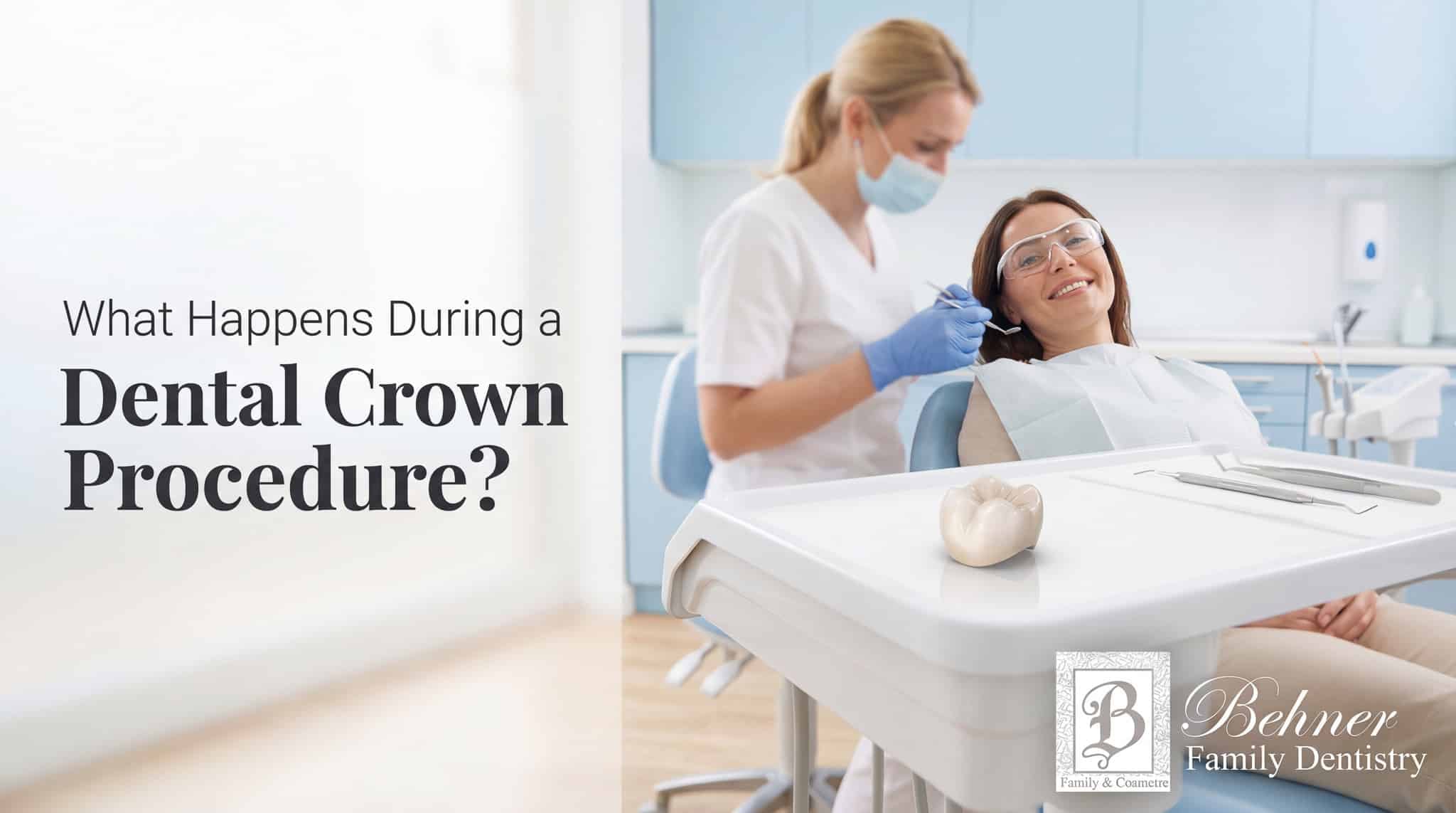
What Happens During a Dental Crown Procedure?
If your dentist has recommended a dental crown, you’re probably wondering what exactly that means — and what you’re in for. The good news is that a crown procedure is one of the most routine restorative treatments in dentistry, and most patients are surprised by how straightforward it is.
Here’s a complete walkthrough of what to expect, from your first appointment through final placement.
What Is a Dental Crown — and Why Would You Need One?
A dental crown is a tooth-shaped cap placed over a damaged or weakened tooth to restore its shape, strength, and function. It completely covers the visible portion of the tooth above the gumline.
Your dentist may recommend a crown if you have:
- A tooth with a large cavity that’s too big for a filling
- A cracked or fractured tooth
- A tooth that’s been weakened after a root canal
- A broken tooth that needs structural support
- Severe wear from grinding
- A tooth receiving a dental implant restoration
Crowns are also used cosmetically to improve the appearance of a badly discolored or misshapen tooth. In Altamonte Springs, restorative dentistry patients often combine crown placement with other treatments as part of a broader smile improvement plan.
Step-by-Step: What Happens During a Crown Procedure
Most traditional crown placements involve two appointments. Here’s what happens at each one.
Appointment 1: Tooth Preparation and Impression
Examination and X-rays
Before any work begins, your dentist will examine the tooth and take X-rays to assess the extent of damage and check the roots and surrounding bone. If there are signs of infection or significant decay, a root canal may need to be completed first.
Anesthesia
The area around the tooth is numbed with a local anesthetic. You should feel pressure during the procedure, but not pain. Let your dentist know if you feel discomfort — they can add more anesthetic as needed.
Tooth Reshaping
Your dentist will reshape the tooth by filing down the outer layer on all sides and the top. The amount removed depends on the type of crown being placed and the thickness needed for a proper fit. If significant tooth structure has been lost to decay or damage, the dentist may build the tooth back up using a filling material before shaping it — this is called a “core buildup.”
Impression or Digital Scan
Once the tooth is shaped, your dentist will take an impression. Many modern dental offices, including practices in the Altamonte Springs area, now use digital intraoral scanners instead of traditional putty molds — a faster and more comfortable experience. This impression is sent to a dental lab (or processed in-office for same-day crowns) to fabricate your permanent crown.
Temporary Crown Placement
While your permanent crown is being made — typically one to two weeks — a temporary crown is placed over the prepared tooth to protect it. Temporary crowns are made of acrylic or stainless steel and are cemented with temporary adhesive, so they’re not as strong as your permanent one. During this time, avoid sticky foods, chewing gum, and biting hard items on that side.
Appointment 2: Permanent Crown Placement
Removing the Temporary Crown
The temporary crown is gently removed and the tooth is cleaned.
Checking the Fit
Your dentist will place the permanent crown to check fit, shape, and color before cementing it in place. They’ll look at how it sits against neighboring teeth, how it affects your bite, and whether the color matches your surrounding teeth naturally.
Adjustments
Minor adjustments to the shape or bite may be made chairside. Getting the bite right is important — an improperly fitting crown can cause jaw discomfort or uneven wear over time.
Permanent Cementation
Once everything looks and feels right, the crown is permanently cemented into place. After the cement sets, your dentist will clean up any excess and do a final bite check.
The entire second appointment typically takes 30 to 60 minutes.
Same-Day Crowns: Is That an Option?
Some dental offices use CAD/CAM technology (like CEREC) to design and mill a permanent ceramic crown in-office during a single visit. If your dentist offers same-day crowns, the process still involves tooth preparation and an impression — but the milling happens on-site, eliminating the lab wait and the temporary crown stage.
Ask your Altamonte Springs dentist whether same-day crown technology is available if you’d prefer to get it done in one visit.
What Type of Crown Is Right for You?
Crowns are made from several different materials, each with tradeoffs in strength, aesthetics, and cost:
- Porcelain-fused-to-metal (PFM): A metal base with a porcelain exterior. Strong and fairly natural-looking, but the metal margin can sometimes show near the gumline over time.
- All-ceramic or all-porcelain: The most natural-looking option, and a good choice for front teeth. Modern ceramics like zirconia are also very durable.
- Zirconia: Extremely strong, tooth-colored, and increasingly popular for both front and back teeth. Often used for molar crowns due to its durability under chewing pressure.
- Gold or metal alloys: Very durable and long-lasting, with minimal tooth removal required. Less popular today due to aesthetics but still a solid choice for back molars in some cases.
Your dentist will recommend a material based on the location of the tooth, your bite, cosmetic preferences, and your budget.
Does Getting a Crown Hurt?
The procedure itself is performed under local anesthesia, so you shouldn’t feel pain during either appointment. Some patients experience:
- Mild sensitivity or soreness around the tooth and gum after the anesthetic wears off
- Brief sensitivity to hot or cold temperatures with the temporary crown
- Some tenderness when biting down in the first day or two after final placement
These symptoms are normal and typically resolve within a few days. Over-the-counter pain relievers like ibuprofen are usually sufficient. If you have significant pain, a prolonged sensitivity to bite pressure, or notice the crown feels “high” on your bite, contact your dentist — a small adjustment can make a big difference.
How Long Does a Dental Crown Last?
With proper care, crowns typically last 10 to 15 years or longer. Some patients keep theirs for 20 or more years. The lifespan depends on the material, where the crown is placed, your oral hygiene habits, and whether you grind your teeth.
To maximize the life of your crown:
- Brush twice daily and floss around the crown just as you would a natural tooth
- Attend regular dental exams and cleanings
- Avoid chewing ice, hard candies, or using your teeth as tools
- Wear a nightguard if you grind your teeth during sleep
People Also Ask
Is a dental crown painful?
The procedure is done under local anesthesia, so there’s no pain during preparation or placement. Mild soreness afterward is normal and fades within a few days.
How many appointments does a crown take?
Most traditional crown procedures take two appointments spaced one to two weeks apart. Same-day crown technology can complete the process in a single visit.
Can a tooth still decay under a crown?
Yes — decay can develop at the margin where the crown meets the tooth, especially if oral hygiene is poor. This is why brushing, flossing, and regular cleanings remain important even with a crown.
How do I know if I need a crown or just a filling?
Your dentist will evaluate the extent of damage. Generally, if more than half the tooth structure is compromised, a crown is the more durable long-term solution compared to a large filling.
What’s the difference between a crown and a cap?
Nothing — they’re the same thing. “Cap” is just a more informal term for a dental crown.
Will my crown look natural?
Modern ceramic and zirconia crowns are designed to match the color and translucency of your surrounding teeth closely. Most people can’t tell the difference between a well-made crown and a natural tooth.
Getting a Dental Crown in Altamonte Springs
If you’ve been told you need a crown — or if you have a damaged tooth that’s been bothering you — don’t put it off. Leaving a cracked or decayed tooth untreated can lead to infection, tooth loss, or the need for more extensive treatment down the road.
A crown procedure is a reliable, well-established way to save and protect a tooth that would otherwise be lost. Your Altamonte Springs dentist can walk you through which type of crown makes sense for your situation and what your options are based on your insurance or budget.
Schedule a restorative dentistry consultation to get a clear picture of what your tooth needs — and how simple the fix can actually be.